Eid Mubarak - Eid al Adha
May you be blessed with His bounty on this wonderful day. Selamat Hari Raya Haji to all my readers.
posted by Awang Goneng @ 12:11 am
9 Comments


On Trengganuspeak and the Spirit of Trengganu
May you be blessed with His bounty on this wonderful day. Selamat Hari Raya Haji to all my readers.
posted by Awang Goneng @ 12:11 am
9 Comments
In the deep, dark crevasse of Trengganu history is a letter that got me baffled for a while. It has, in fact, baffled many people too, some of them historians, by the tone of its supplication. Or is it an assertion – of rights, of obeisance, of authority on the slide?

Many people now forget that in the interim between Japanese invasion and British return was a period of administration by Siam of the four northern Malay States Kedah, Perlis, Kelantan and Trengganu. They were handed to Thailand in return for their cooperation in paving the way for a Japanese invasion of the peninsula. From 1943-1945 Trengganu was effectively Thai, using Thai-issued stamps for its postal service and having Thai-speaking Malay dignitaries in the day-to-day administration.
That control was also asserted in other ways, using that mystical symbolism of cannons form instance. The Malays have always had attachments to these heavyweight weapons, giving them names and mystical significance. On Bukit Puteri were several, with names like Sri Jamlur, Sri Buih, Sri Johor, Laila Majnun and then there was a pair - little and large - one said to have begotten the other: the mother Che Selamah and the daughter Che Safiah. You can probably still see them on Bukit Puteri, but many were taken away to Thailand during this brief administration. The point may have been that a state deprived of its mystical symbolism had lost everything, but of course I am only guessing.
In 1945, after the Japanese surrender, the British came back to reassert their claim, and for a while, Trengganu, like other states were under British Military Administration (BMA). Thai stamps were withdrawn and new ones, with the BMA overprint, were sold at the post office.
In this interregnum between Thai and colonial rule as before the war, a man in the village of Ladang in Kuala Trengganu took out his typewriter and thumped out a note to D. Headley, a man he knew as the Lieutenant Commander and Chief Commander Civil Affairs, Trengganu.

The purpose of this letter was baffling as I could not fathom what he was trying to convey to Mr Headley, and I suspect Mr Headley too would not have been able to make head or tail of his mission. It was polite in tone, full of Malay style salutations, too full in fact as to create a haze over the content. I even suspected that it was originally written in Malay and then translated – very literally – by someone else with a Malay-English dictionary at hand.
It spoke, probably of two comrades in arms (“Brother-Army”) who died (as I gathered from the phrase “Death corpse”), and the letter writer, in all earnestness, prayed that they be despatched to “Soul-Heaven”. And he also – I think – wanted the British army to dress in mourning for two days or perhaps in “two days time” after his letter.
Some people have guessed from the desperate note that this was a former Thai local dignitary seeking to ingratiate himself to the new overlords. And I thought they could well have been right for it is not unusual for old coat-hangers to seek new apparels.
And then, last week in Facebook, my friend Wan M Yusoff posted about his meeting with his ‘favourite storyteller’ in Kuala Trengganu, Pak Wan Abas, a man long in the tooth but with a very clear mind still for events in the past. I asked Wan Yusoff to record his conversation(s) for future generations. And then, there was this throwaway line in his post: “I did not know that Trengganu was under Thai rule during the Japanese occupation.”
Yes, Trengganu was indeed ruled by Siam, I commented, and to prove that I attached a picture of Thai-issued stamps with the ‘Trengganu’ postmark [see below]. And then, I added, there was something strange: when the British came back, a man who styled himself ‘Lord of Thailand’ wrote a letter to one Mr Headley with content that I found hard to understand. Could he ask Pak Wan Abas if he knew who this Tengku Abdullah Osman of ‘Ladang School’s Vllge’ was?

Things that had been torn apart were now falling back in place. It brought us back to childhood times, to Kampung Ladang, and to a man I often wrote about in my blogs as Ku Löh Nayar, the deranged townsman. As Ku is the Trengganu dimunitive for Tengku, and Löh, the shortened Abdullah, there you have him before your eyes and in your mind, the Lord of Thailand Tengku Abdullah Osman was none other than our Ku Löh Nayar, the disturbed man who terrified us for almost our entire Trengganu schooldays, a local character and the eminently unhinged.
His letter to Mr Headley is now in the safekeeping of the National Archives of Australia, indexed under the item ‘Letter of congratulations of Tengku Abdullah Osman 21 October 1945’.
All this happened during the short reign of Sultan Ali who was installed Sultan when his father, Sultan Sulaiman Badrul Alam Shah of the Istana Kolam died. Sultan Ali was later removed from the throne by the British perhaps because he was put on the throne by the Japanese or maybe there were other reasons that we are not yet privy to. [See his latter day attempt at recognition and recompense in the New Straits Times,Feb 28, 1995; above, right column]
Thank you Pak Wan Abas, may Allah preserve you, and to Wan M Yusoff for helping to solve this long (and hilarious) mystery. Thank you to the blogger Le Minh Khai for having brought this letter to my attention.
posted by Awang Goneng @ 12:10 am
3 Comments

There is this line that I always pull when Lat and I are together. We're both writing a book together where Datuk Lat will be doing the text and I'll be drawing the pictures. In reality the joke is on me for the Datuk is not only a widely read man and an able writer but also a very amusing raconteur.
We had a reunion last Monday and then on Tuesday. The Monday meeting also brought Cheryl Dorall, respected fellow journalist, former Malay Mail columnist and distinguished former editor of the Sunday Star. They, my mate Kak Teh and myself made the former New Straits Times old timers' combo at the Holiday Villa in Londra. We were also joined by Mohamad Jefri, Holiday Villa's manager.
The picture above shows how successful Datuk Lat was when drawing from memory. Thank you, Sir!
posted by Awang Goneng @ 2:26 pm
9 Comments

We are now going a-sailing, the seafaring people on the shore of Ujung Tanjong in Kuala Trengganu for it has always been in us, wind blasted souls encrusted with salt to the core, brine and brackish water in the Pantai Teluk with skeletons of abandoned boats that came back and could take the journey no more to Senggora; ikang belukang and tiny crabs peering out from the mud, pincer-waving to one and all.
We have made this frame from thin bamboo, stolen probably from the bamboo hedge of the Sekölöh Paya Bunga, glossy paper from Indian shops, red and green and blue, and streamers entwined from crepe paper and gaps in the ship patched up - so as not to strain the budget - with old copies of the Straits Times and Utusan Melayu.
They call it tujuh likor, a word that has long vanished from our everyday tongue. What is likor? And why seven of them in this lengthening month of puasa? It is time for ships standing in the front yard of our houses and bamboo cannons blasting away carbide fumes and deafening the cries of mothers and excited children and the voice of Pök Lèh from the surau.
Ramadan has been a-sailing so quickly but never too quickly for a child. The night is flickering with lights and shadows and paraffin and whiffs of carbide in the air. Rushed is the iftar, rushed is the prayers of children of prayerful people for this is the night of the beginning of the month of Shawwal.
The day after this is Hari Raya, oh the day after that perhaps, it all depends on the moon in the sky but oh joy is the night and food on plates, and ketupat and kuah kacang and beleda, the dry, sugar-coated coloured jewels.
Would Hari Raya come every day, would all those past Rayas that have gone lost in the mists of years, would they all come back now, for now is the time for forgiving, for visits to past people all lying in the solace of their earthly beds marked with stones, time for children everywhere to feel a little rich, for a while.
Dear Readers: Selamat Hari Raya. I have been away on a ship and have just come back to shore.
Raya image courtesy of Ethnic Minority Liberal Democrats.
posted by Awang Goneng @ 11:00 am
14 Comments
This very kind letter arrived from America -
Dear and esteemed Awang Goneng,Thank you, Sir, may God bless you too. A Map of Trengganu is still available from online retailers and from Foyles in London and good bookshops in Malaysia and Singapore. Or from the Pizzaman at large in Malaysia: SMS, 019-3199788 (Karim); email, akarimomarATyahoo.comI am hopeful that you are blessed with good health as much as you have blessed your readers with your prose.
I have not written in a while, but learned you had published your second book a while ago. I purchased it "A Map of Trengganu" and wanted to express my deepest thanks to you. I began the reading and within a few pages already knew that this latest work would bring me moments of happiness as well as melancholy, because as conscious beings, the past will always bring happiness as well as sadness. Sadness in the way that one yearns to relive or go back to a time of innocence as well as a time of remembrance of days past, memories of loved ones who have past one's way - it is the circle of life, so to say. But, I was totally surprised to see your thanks to me about the incense burner! I felt that I was now part of your book and it made me so appreciative of life and sharing with others, like you have shared with your readers.I hope that God blesses you with a long and healthy life so that I can "selfishly" live from your future works; you are so gifted with words and your story is so transitive, it crosses over into all walks of life. Reading your stories allows me to relive mine. I hope you do well in what ever you do. You are an incredible soul.
Sincerely,
Louis Crespo
New York
posted by Awang Goneng @ 1:45 pm
10 Comments

Budök budök mmaing wa
Atah jambatang
Lang kangök, lang kangök
dok terbang
Anök-anök dok nnöcak
Ssèmbak rötang
Jatoh ddebök, jatoh ddebök
ddalang lökang
Cik Mbong makang kerepok
ikang tambang
cicöh cuka, cicöh cuka
Awang Hitang
Cik Kalèh göhék tèksi
Ddalang hujang
Lapu lik-lak, lapu lik-lak
Ddalang pikirang
Ddölöh Hasang mamöh daging
Kena tulang
Ggögèh gigi, ggögèh gigi
Dök setarang
Kucing bapök masok dapor
Bahang ikang
Pacör-kecing, pacör kecing
Ddalang ppayang.
Illustration: Fly by Kite by Jayme McGowan. With thanks
posted by Awang Goneng @ 3:26 pm
14 Comments
Father collected stamps. He put them in a leather valise,


Labels: BMA, Broadway Approvals, George Santo, S.A.Latif, stamps, Stanley Gibbons, Wang Nawang
posted by Awang Goneng @ 2:20 pm
19 Comments
On Trengganuspeak and the Spirit of Trengganu
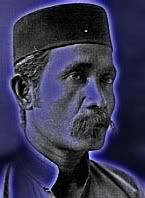
Awang Goneng was born at a very young age, has drifted beyond the shores of Trengganu, and is feeling a crick in the neck from constantly looking back. He claims to have captured the essence of Trengganu, which, he says, was given to him by a very old man living in a cave near the Lake Kenyir. His detractors say it's just a bottle of budu. Undaunted, Awang Goneng is still continuing his search which has taken him to wild places and steaming jungles. Once while swimming in the South China Sea, off Batu Buruk, he was chased by a shoal of kerepok lekor. "Very fast swimmers they are," he says. "I bit into one, it tasted very fishy."
awanggonengATyahoo.co.uk


Subscribe to
Posts [Atom]
